
The Ghana Football Association Medical Committee has held a mid-season medical webinar on overuse injuries, one of the most common yet preventable challenges in modern football.
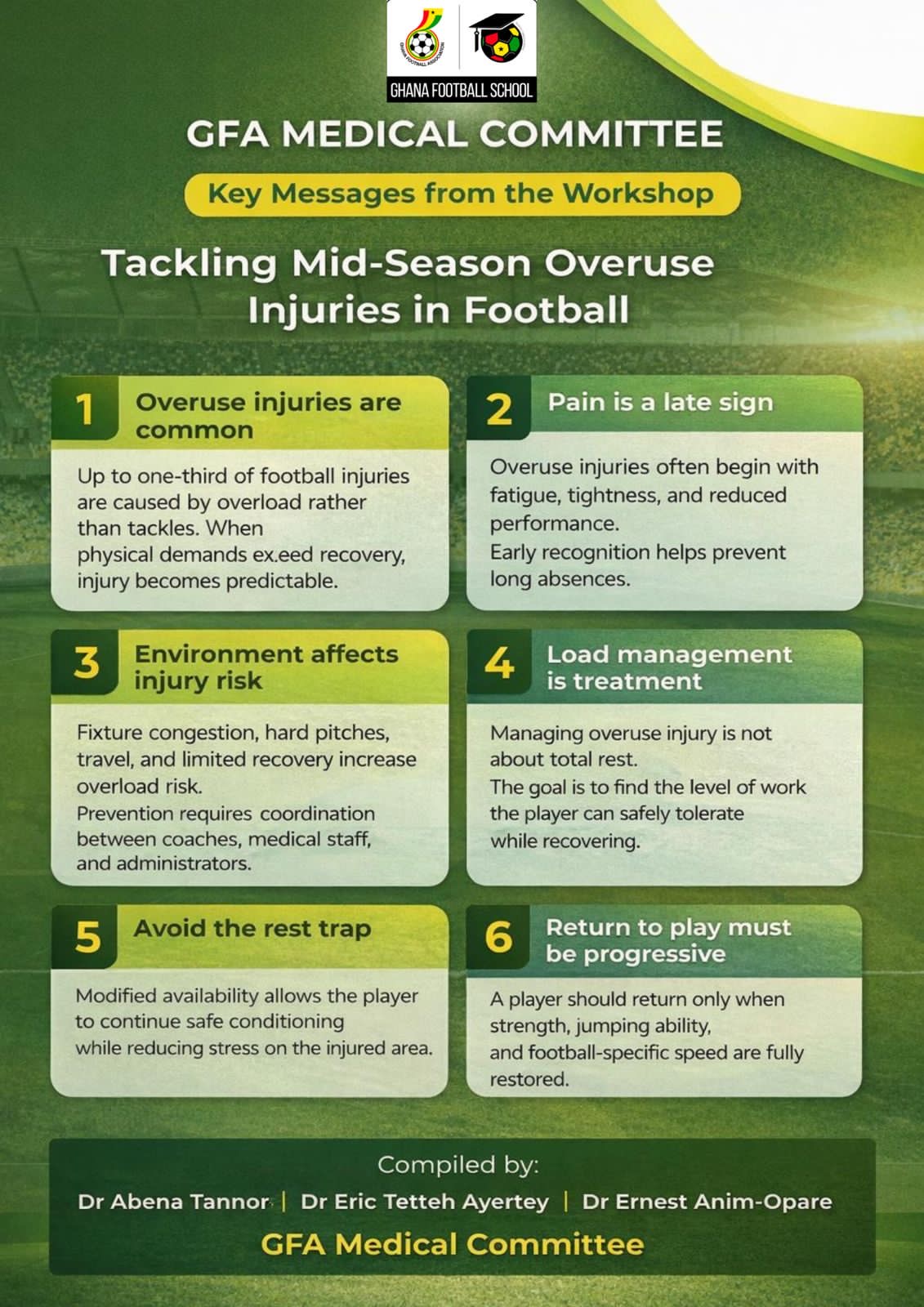
Following the session, the Committee released key messages from the webinar to guide club and national team medical personnel in managing player workload and preventing overuse injuries during the most demanding phase of the season.
With congested match schedules, limited recovery time and frequent travel, players are exposed to sustained physical stress, making overuse injuries increasingly common. Many injuries do not result from a single incident, but develop gradually when the body is repeatedly pushed beyond its capacity to recover. The webinar stressed that proper load management, early recognition of symptoms, careful planning, and clear communication between coaches, administrators and medical staff are essential to preventing these injuries and maintaining player fitness throughout the season.
The programme examined key aspects of overuse injuries in football, from risk factors to management. Committee member Dr Eric Tetteh Ayertey and Chairperson Dr Abena Tannor led the main presentations, with discussions tailored to the Ghanaian and wider African football context, while Vice Chairperson Dr Ernest Anim-Opare moderated the session and guided the discussions.
Participants were reminded that injury risk is influenced not only by the player, but also by the conditions in which the game is played. Fixture congestion, hard playing surfaces, travel demands and limited recovery time can all increase the risk of overload if not properly managed, highlighting the need for better planning and coordination within teams.
Key messages from the webinar have been summarised in an educational graphic to support continued learning among club and national team medical staff.
The GFA Medical Committee also reaffirmed its commitment to organising periodic educational sessions to support medical personnel at all levels of Ghana football and encouraged team medics to maintain close communication with the Committee and seek guidance whenever necessary as part of a collective effort to improve medical care and player safety.
With periodic educational sessions like this, the GFA seeks to strengthen medical practice in Ghana football, with player welfare, injury prevention, proper management, and safe return to play serving as key pillars of national football development.
GFA Communications