GFA adopts 24-Hour IT service to drive efficiency and back Government’s 24-Hour Economy Policy
The Football Association has officially adopted a 24-hour service model within its Information Technology (IT) Department, aligning with government’s bold 24-Hour Economy policy aimed at enhancing productivity and accelerating national development.
The initiative positions the GFA as the pioneering sports institution aligning operational structures with the national agenda aimed at driving productivity, efficiency and job creation through round-the-clock service delivery.
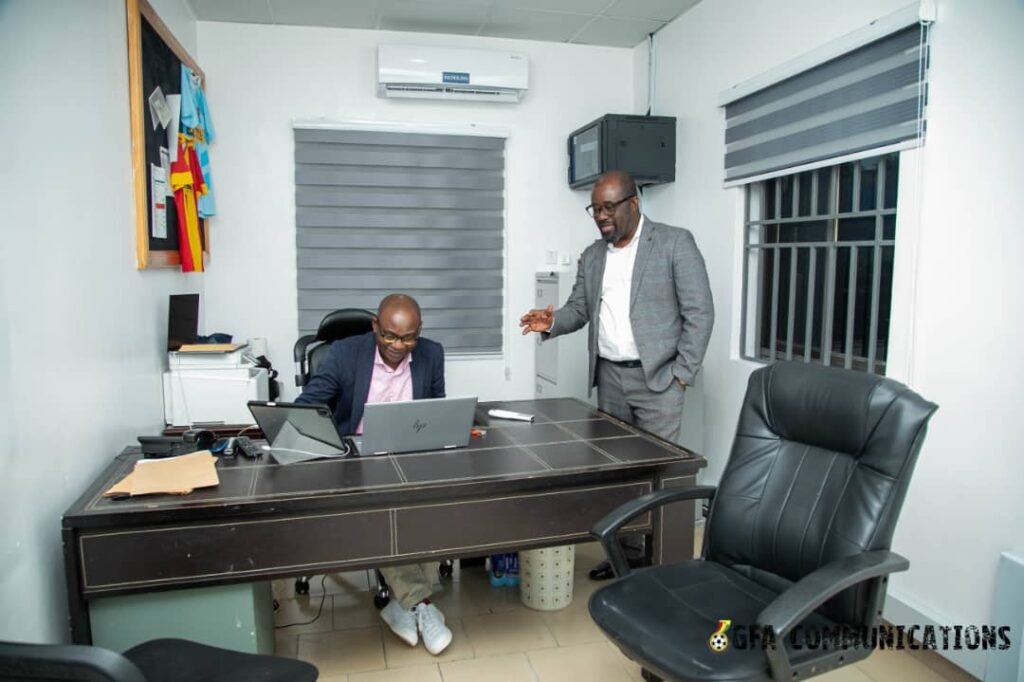
Under the leadership of IT Director Francis Adu, the department has transitioned into a 24-hour system, with staff working in structured batches to ensure uninterrupted technical support to clubs and football stakeholders across the country.
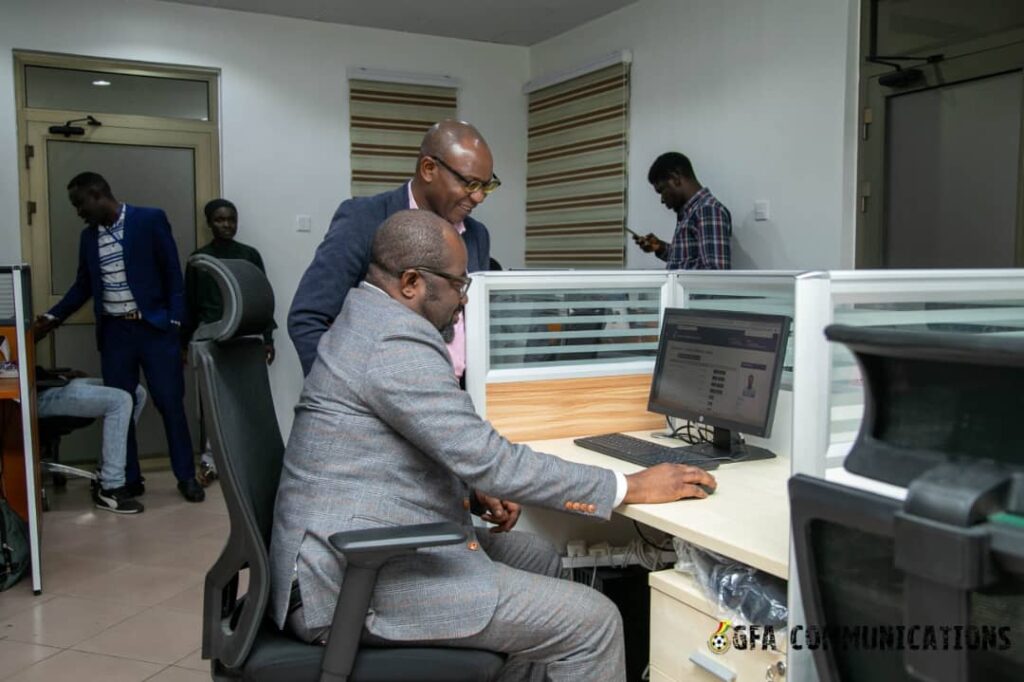
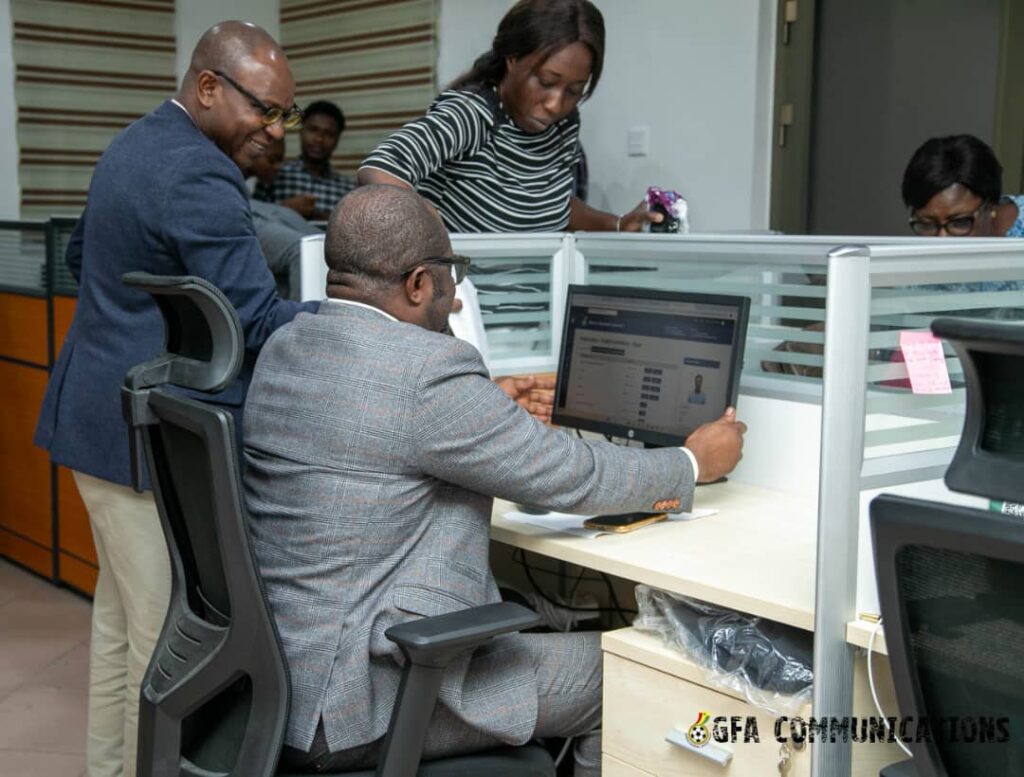
The IT unit, the largest department within the FA in terms of personnel, is now fully operational 24/7, providing continuous digital services ranging from player registration and competition management systems to data administration and stakeholder support.
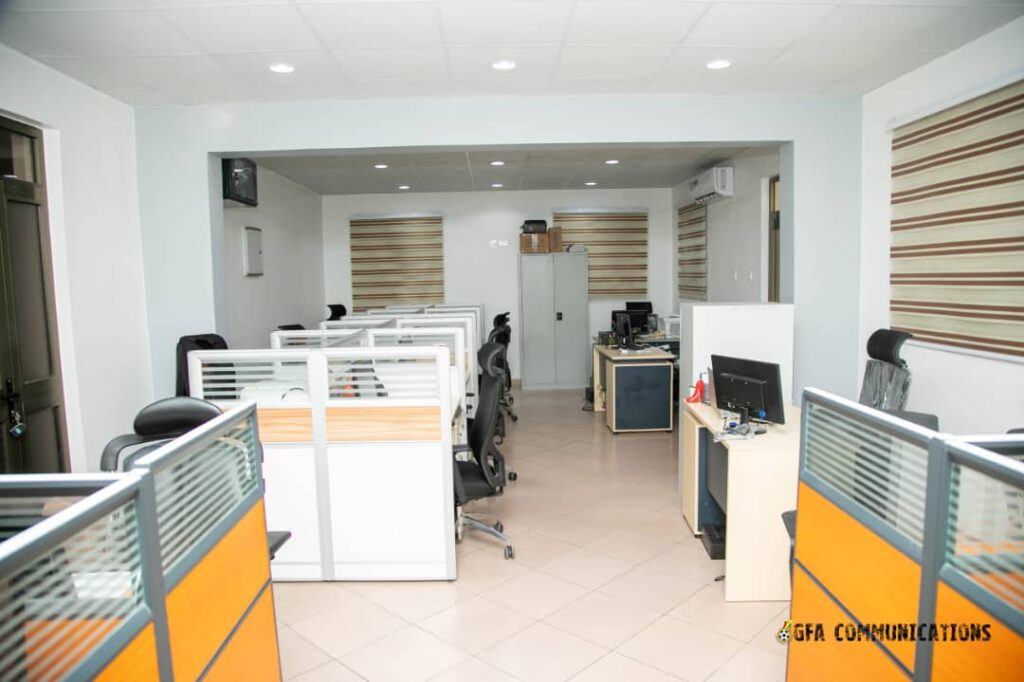
The refurbished Old PLB Block, which houses the IT Department, has been upgraded to function as a centralised digital operations hub. From this base, the team now provides dedicated, real-time support to all ten Regional Football Associations, as well as clubs and administrators across the various divisions of Ghana football.
The move directly supports the government’s 24-Hour Economy policy, signed into law in February 2026 by President John Dramani Mahama, which seeks to transform Ghana’s economy by enabling businesses and institutions to operate continuously through shift systems.
GFA Communications